
A freshly paved driveway looks smooth, dark, and strong. But after some time, that same surface starts turning gray, rough, and weak. Many homeowners assume this is just normal aging, but the truth is, it’s a sign your asphalt is slowly breaking down.
If you ignore it, small color changes can lead to cracks, potholes, and costly repairs. EA Paving often sees homeowners wait too long before taking action. Understanding why asphalt changes color and loses strength can help you protect your driveway early and avoid bigger problems later.
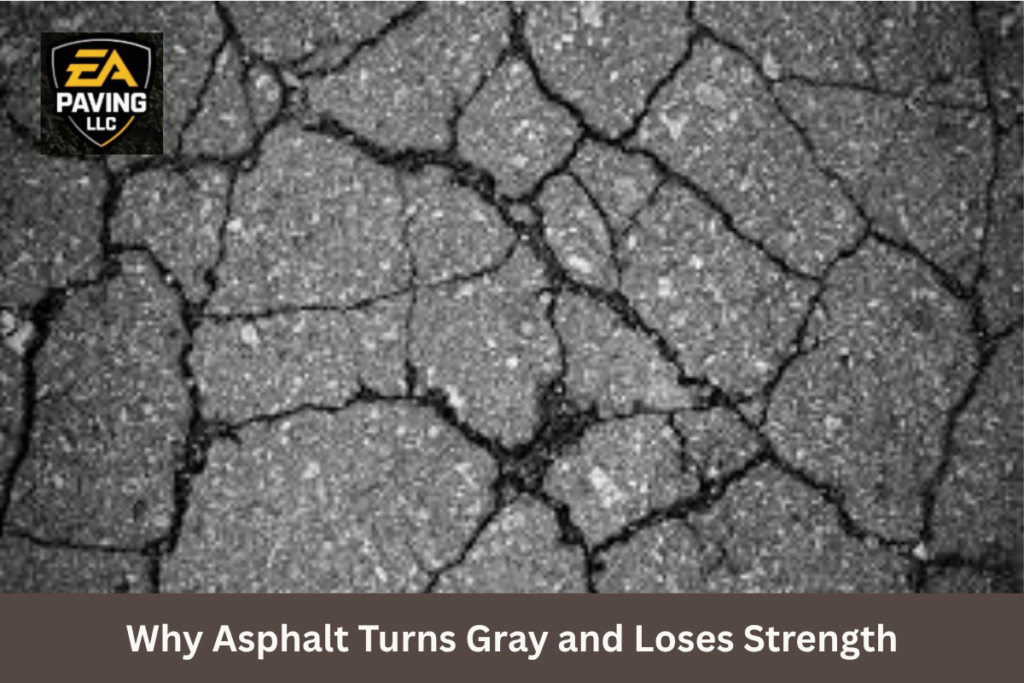
H2: Why Asphalt Turns Gray Over Time
The black color of asphalt comes from bitumen, a sticky binder that holds everything together. Over time, this binder wears away, exposing the lighter-colored stones underneath.
This process doesn’t happen overnight. It’s gradual and caused by several factors working together.
Main Causes of Asphalt Turning Gray
1. Oxidation from Air and Sunlight
One of the major reasons asphalt turns gray is oxidation. When asphalt is exposed to oxygen and sunlight, a chemical reaction begins that slowly dries out the binder.
As this happens:
- The surface loses its rich black color
- The material becomes stiff and brittle
- Flexibility starts to disappear
This process begins as soon as asphalt is installed and continues over time.
2. UV Rays Breaking Down the Surface
Sunlight plays a major role in asphalt damage. UV rays break down the binder, causing it to lose its strength and elasticity.
When this happens, the surface becomes
- Dry and faded
- More prone to cracking
- Less resistant to heavy loads
This phenomenon is why driveways in hot or sunny areas tend to fade faster.
3. Wear from Traffic
Every time a vehicle drives over asphalt, it creates friction. Over time, this friction wears down the top layer and removes the binder that keeps everything together.
As traffic continues:
- The protective layer thins out
- Aggregate (stones) becomes visible
- The surface turns gray and rough
Even residential driveways experience this effect, especially when parking is frequent in the same spots.
4. Water and Moisture Damage
Water is one of the biggest threats to asphalt. When it seeps into small cracks, it weakens the structure from within.
Moisture can
- Soften the base layer
- Expand during temperature changes
- Lead to cracks and potholes
Once water damage begins, the surface deteriorates much faster.
5. Weather and Temperature Changes
Asphalt expands in heat and contracts in cold weather. These constant changes stress the material and weaken its structure over time.
This process leads to:
- Surface fatigue
- Small cracks forming
- Faster color fading
Over time, these small issues combine and cause visible damage.
6. Oil, Chemicals, and Dirt Buildup
Spills from vehicles and everyday dirt can also damage asphalt. Oil and chemicals break down the binder, while dirt traps heat and speeds up deterioration.
Common sources include:
- Engine oil leaks
- Fuel spills
- Dust and debris buildup
These factors may seem minor, but they have a long-term impact on the surface.
Why Gray Asphalt Loses Strength
Color change isn’t just about appearance. When asphalt turns gray, it usually means the binder is breaking down.
As the binder weakens:
- The surface becomes brittle
- Flexibility is reduced
- Load-bearing capacity decreases
This condition makes the pavement more likely to crack, crumble, and develop potholes.
In simple terms, gray asphalt is weaker asphalt.
Early Signs of Asphalt Deterioration
Homeowners often miss the early warning signs. Catching them early can prevent bigger repairs later.
- Fading from deep black to gray
- Rough or dry surface texture
- Small surface cracks
- Loose stones appearing
- Water is not draining properly
These signs indicate that the surface is no longer protected.
What Happens If You Ignore It
Ignoring gray asphalt can lead to serious problems over time.
- Cracks grow larger and deeper
- Water reaches the base layer
- Potholes begin to form
- Repairs become more expensive
What starts as a simple color change can eventually require full resurfacing or replacement.
How Seal Coating Helps Protect Asphalt
Seal coating plays a major role in protecting asphalt from turning gray and losing strength. It adds a protective layer that shields the surface from damaging elements.
Seal coating helps by:
- Blocking UV rays from the sun
- Reducing oxidation
- Preventing water penetration
- Restoring the dark color
- Slowing down wear and tear
EA Paving often recommends seal coating every few years to maintain both appearance and durability.
Practical Maintenance Tips for Homeowners
Keeping your asphalt in excellent condition doesn’t require constant work, but it does require consistency.
- Clean the surface regularly to remove dirt and debris
- Fix small cracks before they grow
- Avoid letting water sit on the surface
- Schedule seal coating at the right time
- Watch for oil stains and clean them early
These small steps can significantly extend the life of your driveway.
When to Call a Professional
If your asphalt has turned noticeably gray or started cracking, it’s time to take action. A professional inspection can determine how far the damage has progressed.
EA Paving can evaluate your driveway and suggest whether seal coating, repairs, or more extensive work is necessary. Acting early helps avoid larger expenses and keeps your pavement in excellent condition.
Conclusion
Asphalt turning gray is not just a cosmetic issue—it’s a clear sign that the surface is losing strength. Oxidation, sunlight, water, and daily wear all contribute to this process. Over time, the binder breaks down, leaving the surface dry, brittle, and vulnerable to damage.
By understanding these causes and taking early action, homeowners can protect their driveways and avoid costly repairs. If your asphalt is starting to fade or crack, it may be time to consider maintenance options like seal coating with EA Paving.
FAQs
New asphalt is rich in bitumen, which renders it a dark color. Over time, the binder wears away, exposing lighter-colored stones underneath.
Yes. A gray color usually indicates that the binder is weakening, making the surface more prone to cracking and structural issues.
Seal coating can restore the dark appearance and protect the surface, but it works best before major damage occurs.
It can start fading within a few months, depending on weather, traffic, and maintenance.
It may still be usable, but it is more vulnerable to cracking and damage. Maintenance should be done as soon as possible.