
If you’ve been told to seal coat your driveway, you’ve probably wondered if it’s really necessary or just an extra expense. Many homeowners hesitate because seal coating doesn’t fix damage—it only protects the surface. So the question becomes: is it actually worth paying for?
The honest answer is that it depends on the condition of your asphalt and when you apply it. EA Paving has worked with many homeowners who either saved money by sealing at the right time or wasted money by doing it at the wrong time. This guide will help you understand when seal coating makes sense and when it doesn’t.
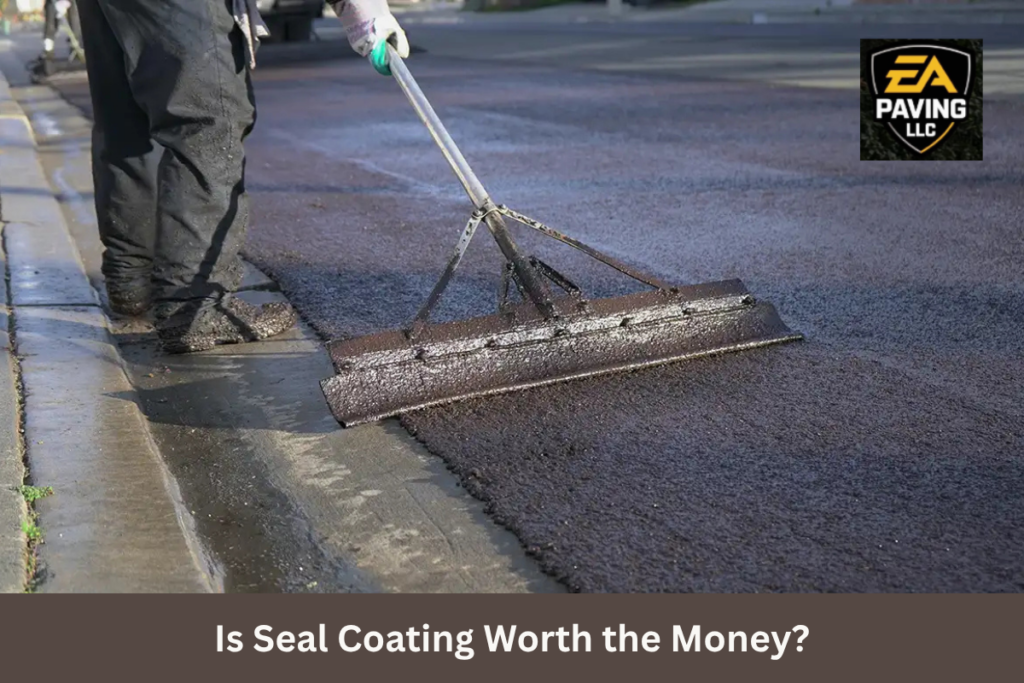
What Seal Coating Actually Does
Seal coating is a protective layer applied over asphalt. It acts as a barrier between your driveway and damaging elements like sunlight, water, and chemicals.
It does not repair cracks or potholes. Instead, it slows down the process that causes those problems in the first place.
Think of it as maintenance rather than repair.
Why Homeowners Consider Seal Coating
Over time, asphalt naturally fades, dries out, and weakens. This happens due to exposure to UV rays, moisture, and everyday use.
Seal coating helps reduce this damage by creating a protective layer that keeps the surface intact for longer.
Benefits of Seal Coating
Seal coating has several practical advantages when applied at the right time.
- Protects against water damage and moisture penetration
- Reduces damage from sunlight and oxidation
- Prevents oil and chemical spills from weakening asphalt
- Slows down surface wear from traffic
- Restores the dark black appearance of the driveway
Another important benefit is cost savings. Seal coating is relatively inexpensive compared to repairs or replacement.
Cost vs Long-Term Value
One of the biggest concerns homeowners have is cost. Seal coating usually costs much less than major asphalt repairs.
- Seal coating: lower cost per square foot
- Crack repairs or patching: significantly higher
- Full replacement: the most expensive option
Regular seal coating every few years can extend the life of your driveway and reduce the need for major repairs. It can often cut long-term costs by preventing serious damage early.
When Seal Coating Is Worth the Money
Seal coating is worth it when your asphalt is still in excellent condition and only showing minor wear.
Ideal Conditions for Seal Coating
- The surface is slightly faded or turning gray
- Small, hairline cracks are present
- No major potholes or structural damage
- The driveway is between 2 and 15 years old
In these cases, seal coating protects the surface and helps extend its lifespan.
When Seal Coating Is NOT Worth It
Seal coating is not always the right choice. In some situations, it can be a waste of money.
- Large cracks or potholes are already present
- The base layer is damaged or unstable
- The surface has widespread “alligator cracking.”
- Drainage issues are causing standing water.
Seal coating cannot resolve structural problems. Applying it in these situations may only temporarily mask the damage while the underlying issue continues to worsen.
Common Misconceptions About Seal Coating
Many homeowners misunderstand what seal coating actually does.
- It is not just for appearance, although it improves how your driveway looks.
- It does not repair damage—it prevents future damage
- It is not a one-time process; it needs to be reapplied every few years
Understanding these points helps set realistic expectations.
How Often Should You Seal Your Coat?
Seal coating is not permanent. To maintain its effectiveness, it needs to be applied regularly.
- Every 2–3 years for most residential driveways
- Sooner in areas with harsh weather or heavy use
- Only after proper cleaning and minor repairs
Applying it too frequently or too late can reduce its effectiveness. Timing matters.
Risks of Skipping Seal Coating
If you skip seal coating entirely, your asphalt is exposed to constant damage. Over time:
- UV rays dry out the binder
- Water seeps into cracks
- The surface becomes brittle
- Cracks turn into potholes
This leads to higher repair costs and shorter pavement life.
Practical Tips for Homeowners
If you’re considering seal coating, keep these points in mind:
- Always repair cracks before sealing
- Do not seal brand-new asphalt immediately
- Choose the right season with dry weather
- Avoid heavy traffic right after the application
- Work with experienced contractors like EA Paving
These steps ensure better results and longer-lasting protection.
Why Professional Application Matters
Seal coating may seem simple, but poor application can lead to early failure. Proper preparation, material quality, and timing all affect the outcome.
EA Paving ensures:
- The surface is properly cleaned and prepared
- Cracks and minor damage are addressed first
- The seal coat is applied evenly and correctly
- The driveway is ready for long-term use
This reduces the chances of premature wear and wasted money.
Conclusion
So, is seal coating worth the money? In most cases, yes—but only when applied at the right time and on the right surface.
If your driveway is still in excellent condition, seal coating acts as a protective layer that slows down damage and extends its life. It also costs far less than major repairs or replacement.
However, if your asphalt already has serious structural issues, seal coating alone won’t solve the problem. In those cases, repairs or resurfacing are necessary first.
EA Paving can assess your driveway and recommend the best course of action if you’re unsure about its condition. Taking action at the right time helps you avoid unnecessary costs and keeps your pavement in excellent shape for years.
FAQs
It is not mandatory, but it helps protect the surface and extend its lifespan, especially in areas with harsh weather.
Costs vary, but it is much cheaper than repairs or replacement and is considered a preventive maintenance expense.
No. Cracks and potholes need to be repaired before applying seal coating.
Typically, it lasts around 2–3 years, depending on weather and usage.
Avoid it if your asphalt has major damage, drainage issues, or structural failure.
Yes, EA Paving offers seal coating along with proper surface preparation and maintenance recommendations.