
If your driveway or parking area is showing cracks, potholes, or severe wear, you might be wondering whether asphalt milling or a full replacement is the best solution. Choosing the wrong approach can lead to higher costs and recurring problems. EA Paving has helped homeowners make the right choice, and this guide will explain the differences and advantages of each method and when it makes sense.
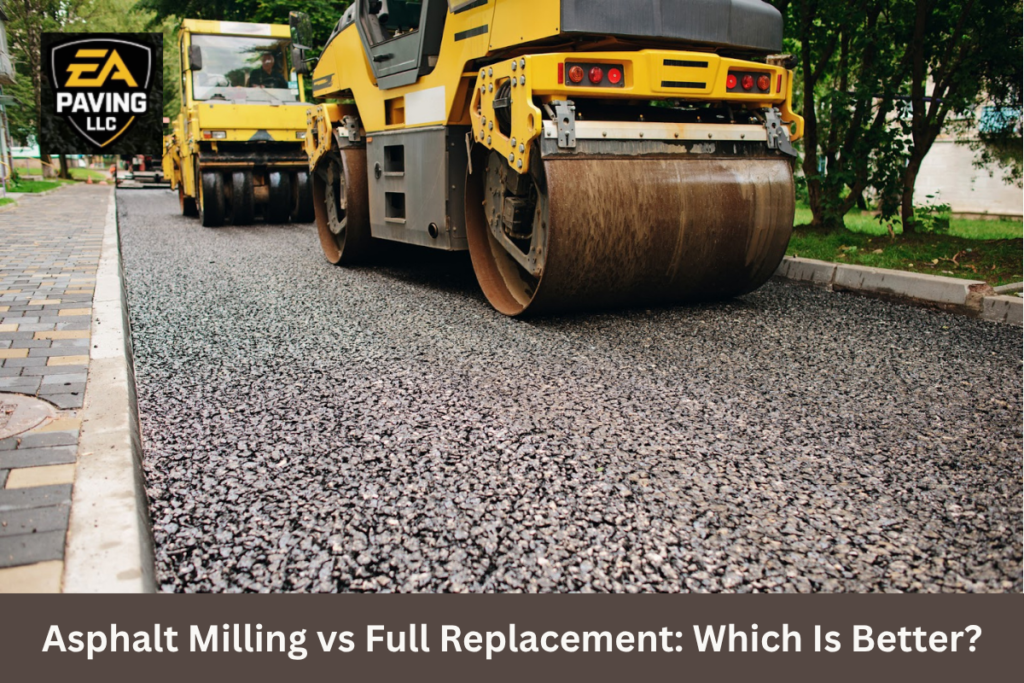
What Is Asphalt Milling?
Asphalt milling, also known as cold planing, is the process of removing the top layer of asphalt without disturbing the base. Think of it as shaving the surface to prepare it for a new asphalt layer.
How Asphalt Milling Works
- A milling machine grinds the old asphalt to a specified depth.
- The removed material, called millings, can often be recycled.
- The surface is then smoothed and ready for a new asphalt layer.
Milling resolves surface problems and allows for a level, even pavement without completely replacing the base.
When Milling Is Suitable
Milling is usually recommended when:
- Cracks, potholes, or rutting affect only the top layer.
- Water has caused surface damage, but the base is solid.
- You want to correct minor slope or drainage issues.
Milling is less invasive and often more cost-effective than a full replacement while extending pavement life.
What Is Full Replacement?
Full replacement, also called full-depth asphalt replacement or reconstruction, involves removing the entire pavement, including the base and sub-base, then laying new asphalt from scratch.
How Full Replacement Works
- The old asphalt and base materials are completely removed.
- The sub-base is repaired or replaced as needed.
- A new asphalt base and surface are installed, compacted, and leveled.
Full replacement is a more extensive process but addresses both surface and structural problems.
When Full Replacement Is Necessary
Full replacement is typically needed if:
- The pavement has deep cracks, major potholes, or extensive structural damage.
- The base is weakened or unstable.
- Previous repairs have failed repeatedly.
While more expensive, full replacement ensures a strong, long-lasting surface.
Milling vs Full Replacement: Key Differences
Understanding the differences helps you decide which solution fits your situation:
| Feature | Asphalt Milling | Full Replacement |
| Scope | Removes the top asphalt layer | Removes entire pavement, including base |
| Purpose | Fixes surface damage | Fixes structural and surface damage |
| Cost | Lower, less labor-intensive | Higher, more material and labor are required |
| Time | Faster process | Longer due to full reconstruction |
| Longevity | It depends on base condition | Longer-lasting if the base is repaired properly |
Signs Your Pavement Needs Milling
You may need milling if:
- Potholes appear, but the base is still solid.
- Minor surface cracks or rutting are present.
- Asphalt is uneven but structurally stable.
- You want to refresh the surface without full reconstruction.
Milling can restore appearance and functionality without the higher cost of a full replacement.
Signs Your Pavement Needs Full Replacement
Full replacement is necessary when:
- Deep cracks, severe rutting, or widespread potholes exist.
- The base or sub-base is damaged or unstable.
- Previous surface repairs have failed.
- You want a long-term solution for heavily used driveways or commercial lots.
Ignoring these signs may lead to frequent repairs and higher long-term costs.
Risks of Choosing the Wrong Method
Selecting the wrong method can cause ongoing issues:
- Milling over a damaged base may result in cracking and early failure.
- A full replacement when milling would suffice, unnecessarily increasing costs.
- Poor drainage or unresolved base issues can shorten pavement lifespan.
EA Paving recommends a professional assessment to determine the appropriate repair method for your pavement condition.
Practical Considerations for Homeowners
When deciding between milling and full replacement, keep in mind:
- Budget: Milling costs less up front; a full replacement is pricier but longer-lasting.
- Time: Milling is quicker and causes minimal disruption.
- Longevity: Full replacement lasts longer if structural problems exist.
- Usage: Heavily used driveways or parking lots may require full replacement.
- Appearance: Milling improves surface aesthetics, but full replacement gives an entirely new look.
Maintenance After Asphalt Work
After milling or full replacement, proper care extends the life of your pavement:
- Keep the traffic light on for the first few days to let the asphalt settle.
- Seal cracks early to prevent water infiltration.
- Clean debris regularly to avoid stains and surface damage.
- Schedule periodic inspections for early signs of wear.
Why Professional Help Matters
Asphalt work is not just about laying new material—it requires proper preparation and compaction. EA Paving can
- Evaluate whether milling or full replacement is best.
- Ensure proper grading and base preparation.
- Apply asphalt correctly to prevent early deterioration.
- Advise on maintenance for maximum longevity.
Professional intervention prevents repeated repairs and protects your investment.
Conclusion
Milling and full replacement serve different purposes. Milling fixes surface-level damage when the base is intact, while full replacement addresses both surface and structural problems. Recognizing the signs of damage and choosing the right method ensures long-lasting, smooth, and safe pavement.
If your driveway or parking area shows cracks, potholes, or uneven surfaces, contact EA Paving for a professional assessment. Early intervention saves time and money and keeps your pavement in top condition.
FAQs
Milling is best for surface-level damage. Heavily damaged or base-compromised pavement may require full replacement.
Milling is generally faster because it removes only the top layer. A full replacement takes longer because of the base repair and reconstruction.
Not always. If the base is stable and surface damage is minor, milling may be sufficient. Full replacement is needed for structural problems.
Yes. Milling can be combined with patching, overlays, or minor base adjustments to extend pavement life.
Milling is less expensive upfront, but a full replacement may be more cost-effective in the long term for structurally damaged pavement.
Yes, EA Paving specializes in both methods and can recommend the most suitable approach for your driveway or commercial pavement.