
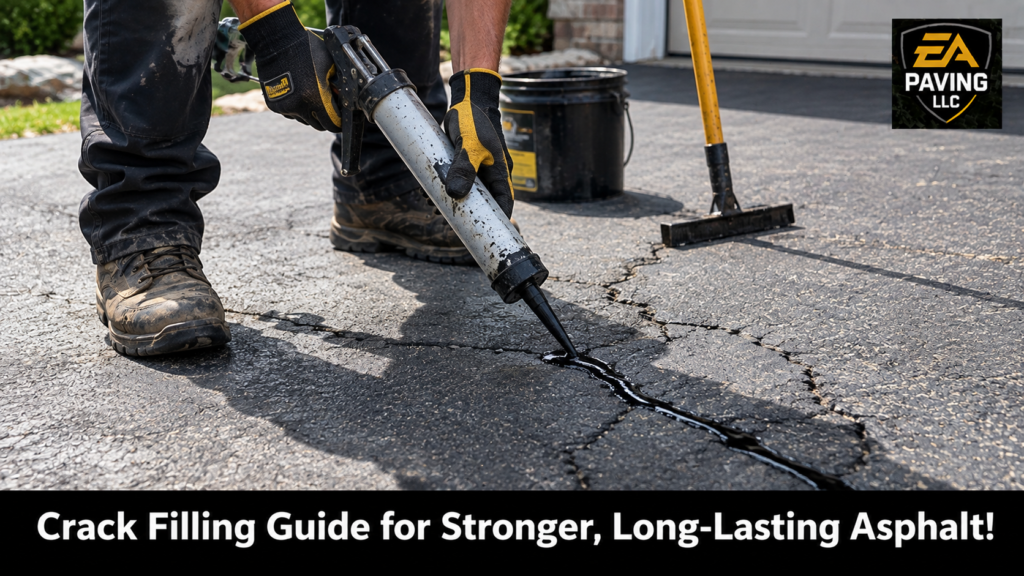
Asphalt driveways and parking lots face constant exposure to traffic, weather, and everyday wear. Over time, small cracks can develop across the surface. Leaving those openings untreated may allow water to enter the pavement and contribute to more serious damage.
For homeowners and businesses in Salem, OR, crack filling is an important part of asphalt protection. EA Paving LLC provides crack repair and seal coating services designed to address existing surface problems and help property owners maintain their pavement.
Why Asphalt Cracks Need Attention
Cracks may begin as minor surface problems, but they can create openings for moisture. Water entering those gaps can contribute to further pavement deterioration.
Oregon weather can make moisture especially important to consider. Frequent rain and temperature changes expose asphalt to changing conditions. During freeze-thaw cycles, moisture within pavement cracks can expand and contract, making existing damage worse.
Taking care of cracks early can help protect the surrounding pavement and reduce the likelihood of more extensive repairs later.
What Is Asphalt Crack Filling?
Crack filling involves placing specialized repair material into gaps and voids in an asphalt surface. Its primary purpose is to limit water intrusion and help prevent existing cracks from becoming more damaging.
How Crack Filling Works
The repair process begins by cleaning the cracks so the filling material can form a strong bond. A suitable asphalt repair material is then applied to the opening and sealed.
Different materials may be used depending on the repair, including hot asphalt, cold-patch products, and sealants designed for asphalt surfaces. The appropriate option depends on the condition and requirements of the pavement.
Proper preparation matters. Simply covering a dirty or poorly prepared crack may not provide the same result as cleaning and filling it correctly.
Benefits of Filling Asphalt Cracks
Timely asphalt crack repair offers several practical benefits for residential and commercial properties.
One of the most important is reducing water intrusion. Filling openings makes it more difficult for moisture to penetrate damaged areas and contribute to further deterioration.
Crack filling can also help property owners address smaller problems before they require more extensive repairs. Repairing isolated cracks is generally a simpler approach than dealing with pavement that has developed widespread damage.
Finally, routine crack maintenance can contribute to the overall durability of an asphalt surface. Combined with other appropriate maintenance services, it can help keep driveways and parking lots functional for longer.
How Seal Coating Complements Crack Filling
Crack filling and seal coating serve different purposes, but they can work together as part of an asphalt maintenance plan.
Crack filling targets individual openings in the pavement. Seal coating, on the other hand, adds a protective layer over the asphalt surface. It can improve resistance to water, UV exposure, and chemicals.
Cracks should be addressed before the pavement receives a seal coat. This creates a more complete maintenance approach rather than simply applying a coating over existing damage.
Residential Driveway Seal Coating
Homeowners can use driveway seal coating to protect their asphalt while maintaining a cleaner appearance. Combining it with timely crack filling can address existing openings before adding surface protection.
Commercial Seal Coating
Commercial parking lots and entrances often experience regular vehicle traffic. Crack filling followed by appropriate seal coating can help businesses maintain a safer, more professional-looking paved area.
EA Paving LLC provides residential and commercial asphalt maintenance services for properties in Salem, Keizer, and surrounding areas.
How Often Should Asphalt Be Seal Coated?
Based on the original maintenance guidelines, asphalt may generally be seal coated every two to three years.
However, there is no schedule that fits every property. Traffic volume, local climate, pavement condition, and previous seal coat applications can affect how frequently the service is needed.
A professional inspection can help determine an appropriate maintenance schedule instead of applying a new seal coat simply because a certain amount of time has passed.
What Affects Crack Filling and Seal Coat Cost?
The cost of crack filling and seal coating can vary from one project to another. The condition of the pavement, amount of repair work required, and specific needs of the surface can all influence the final price.
Rather than viewing preventive maintenance only as an expense, property owners should also consider the potential cost of leaving pavement damage untreated. Addressing smaller cracks can help reduce the chance of needing more extensive repairs later.
EA Paving LLC offers estimates based on the actual condition and needs of each asphalt surface.
Choosing an Asphalt Contractor in Oregon
Effective asphalt maintenance requires more than applying filler or sealant. Proper surface preparation, suitable materials, and experience with pavement repair all matter.
When choosing a contractor, consider experience and knowledge of local conditions. A contractor familiar with Oregon weather can evaluate how moisture, temperature changes, traffic, and existing damage may affect the pavement.
EA Paving LLC is licensed (#253898) and provides asphalt services for homeowners and businesses in Salem, Keizer, and surrounding Oregon communities.
Conclusion
Crack filling is a straightforward but important part of asphalt maintenance. Repairing cracks can limit water intrusion, help prevent additional deterioration, and prepare pavement for seal coating.
If your driveway or parking lot has visible cracks or surface wear, addressing the problem early may help prevent more extensive repairs. Contact EA Paving LLC at (503) 967-9995 for a free estimate and discuss the right maintenance approach for your asphalt.
Frequently Asked Questions
1. What are the benefits of crack filling?
Crack filling helps block water from entering pavement openings and can reduce further deterioration. It also allows smaller areas of damage to be addressed before they become more extensive.
2. How long does crack filling last?
Crack filling may last several years, but its lifespan depends on traffic, weather, pavement condition, and other factors. Regular inspections can help identify cracks that need additional attention.
3. Can I seal coat my own driveway?
Some property owners attempt DIY seal coating. However, professional contractors use specialized equipment and preparation methods that can provide more consistent results.
4. What signs indicate asphalt needs repair?
Visible cracks, fading, surface wear, and noticeable changes in pavement texture can indicate that an asphalt surface should be inspected for possible maintenance or repair.
5. How often should asphalt receive seal coating?
A general guideline is every two to three years, although the right frequency depends on traffic, climate, pavement condition, and previous seal coat applications.