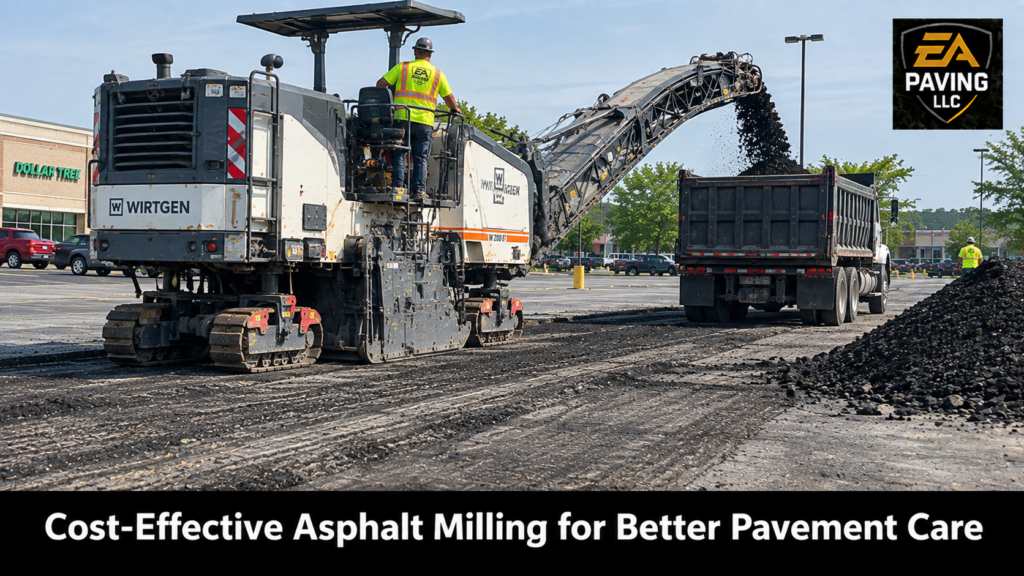
Damaged asphalt does not always require complete removal and replacement. When deterioration is mainly limited to the surface, asphalt milling can provide a practical way to remove worn material while preserving the usable pavement underneath.
EA Paving LLC provides cost-effective asphalt milling services in Portland, Keizer, Salem, and surrounding Oregon communities. Using specialized milling equipment, damaged asphalt can be removed to prepare driveways, parking lots, and other paved surfaces for repair or resurfacing.
What Is Asphalt Milling?
Asphalt milling is the process of grinding away part of an existing asphalt surface. Specialized machinery removes the worn or damaged upper layer while leaving the underlying base in place when it remains suitable for continued use.
This process can address surface problems such as cracks, ruts, bumps, and general wear. After milling, the pavement can be prepared for asphalt resurfacing or other necessary repairs.
Benefits of Asphalt Milling
One important advantage is the ability to preserve the existing foundation rather than replacing the entire pavement structure. This can reduce the amount of work and help control project costs.
Milling also produces material that can be recycled and reused in future paving work, reducing unnecessary waste. The finished milled surface provides a more even area for subsequent pavement improvements.
Asphalt Milling vs. Repaving
Both milling and repaving can improve deteriorated pavement, but they are appropriate for different conditions.
Cost-effective asphalt milling may be suitable when surface deterioration can be removed without replacing the entire pavement. Because the existing base can remain in place, the project may require less material and labor than full repaving.
Complete repaving may be necessary when deterioration extends deeper or the existing pavement structure is no longer suitable.
Why Milling Can Be More Affordable
Milling focuses work on the damaged portion of the asphalt. Instead of removing and rebuilding the entire paved area, contractors can preserve usable sections of the pavement structure.
Milling projects may also be completed faster than full repaving, helping reduce disruption to residential and commercial properties.
The right choice should still be based on pavement condition rather than price alone. A site inspection can determine whether milling is appropriate.
How the Asphalt Milling Process Works
A professional milling project begins with an assessment of the existing pavement. The contractor evaluates its condition and determines how much material should be removed.
Specialized milling machines are then used for asphalt grinding. After preparing the work area, the equipment removes the required surface layer at a controlled depth.
Once milling is complete, the area can be cleaned and prepared for resurfacing or additional asphalt repair.
Because the process requires specialized machinery and experience, asphalt milling is generally better handled by a qualified contractor rather than attempted as a DIY project.
EA Paving LLC is licensed (#253898) and provides asphalt maintenance services for properties throughout its Oregon service area.
Common Uses for Asphalt Milling
Asphalt milling can be used for residential, commercial, and municipal pavement projects.
Homeowners may choose milling when an existing driveway has surface deterioration but does not require complete replacement. Removing worn material can prepare the driveway for resurfacing while preserving usable pavement underneath.
Businesses can use pavement milling to maintain parking lots affected by regular traffic and surface wear. Milling can address damaged areas and prepare commercial pavement for a new asphalt surface.
Municipal applications can include street resurfacing, where removing existing surface material allows roads to be prepared for additional paving work.
What Does Asphalt Milling Cost?
Asphalt milling cost varies according to the size of the area, pavement condition, and specific requirements of the job.
Based on the original estimates, smaller residential projects may range from approximately $1.50 to $3.00 per square foot. Larger commercial milling projects may range from about $1.00 to $2.50 per square foot.
These figures are general estimates rather than guaranteed prices. A property inspection is necessary to determine the scope of work and provide a project-specific estimate.
Milling can cost less than complete repaving when the existing pavement structure can be preserved, making it worth considering for suitable surfaces.
Recycling Asphalt After Milling
One useful feature of pavement milling is that the removed asphalt does not necessarily become waste. Ground asphalt can often be collected, recycled, and incorporated into future pavement materials.
This reduces the need to discard old asphalt and allows existing material to serve another purpose.
Cold milling asphalt is commonly used to remove pavement without heating the existing surface during the milling process. The resulting material can then be collected for recycling and reuse.
When Should You Consider Asphalt Milling?
Visible surface deterioration can indicate that pavement needs professional attention. Cracks, bumps, ruts, general wear, or drainage concerns may be reasons to have the asphalt inspected.
These signs do not automatically mean milling is the correct solution. Some pavement may only need targeted repairs, while more extensive deterioration may require resurfacing or complete repaving.
An experienced asphalt contractor can evaluate the surface and recommend an approach based on its actual condition.
Choosing an Asphalt Milling Contractor
Proper milling depends on suitable equipment, accurate removal depth, and careful site preparation. When comparing asphalt contractors, consider relevant experience, customer reviews, and licensing.
Local knowledge is also valuable when dealing with Oregon pavement conditions.
EA Paving LLC serves Portland, Keizer, Salem, and surrounding areas with asphalt milling and maintenance services for residential and commercial properties.
Conclusion
Cost-effective asphalt milling can remove worn pavement while preserving a usable base, reducing waste, and preparing the surface for resurfacing. For suitable projects, it can provide an affordable alternative to complete pavement replacement.
If your driveway, parking lot, or other asphalt surface needs attention, contact EA Paving LLC at (503) 967-9995 for a free consultation or estimate.
FAQs
1. How long does asphalt milling take?
Project time depends on size and pavement condition. Based on the original information, many residential milling projects can be completed within a day.
2. Can I perform asphalt milling myself?
Milling requires specialized equipment and experience. Hiring a professional asphalt contractor is generally the more practical approach.
3. What happens to the removed asphalt?
Removed asphalt can often be collected, recycled, and reused in future paving materials.
4. How do I know if pavement needs milling?
Cracks, bumps, ruts, wear, and drainage problems can indicate that an inspection is needed. A contractor can determine whether milling, repair, or resurfacing is appropriate.
5. Is milling cheaper than repaving?
Milling can be less expensive when the existing pavement structure is still usable because it avoids complete removal and replacement.