When your asphalt starts to show signs of wear, the big question comes up fast—should you sealcoat or repave? At first glance, both options may seem similar because they improve the look of your surface. However, they serve very different purposes. Choosing the wrong one can cost you time, money, and long-term performance.
Many property owners struggle with this decision because the damage is not always obvious. A few cracks might look minor, but they could signal deeper issues. On the other hand, a faded surface may only need simple protection. That’s why understanding the difference between sealcoating and repaving is essential. Once you know what each option does and when to use it, you can make a confident and cost-effective choice.
Understanding Sealcoating: Protection First
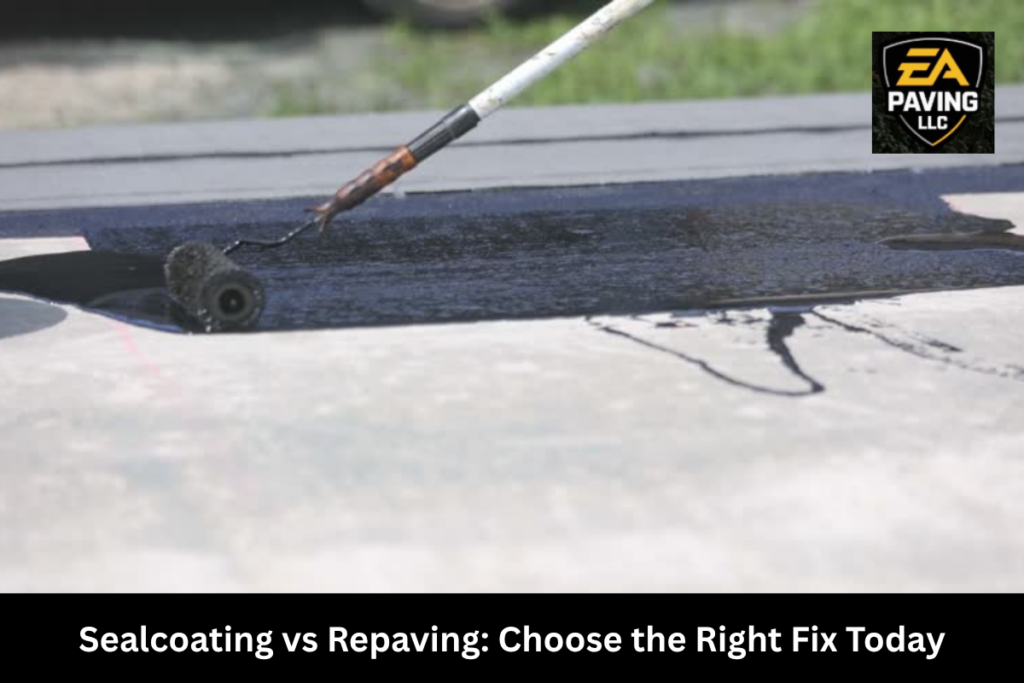
Sealcoating is a preventive maintenance solution. It involves applying a protective layer over your existing asphalt surface. This layer shields the pavement from harmful elements like UV rays, water, oil, and chemicals.
In addition, sealcoating restores the rich black appearance of asphalt, making it look fresh and well-maintained. However, it’s important to understand that sealcoating does not fix structural damage. Instead, it protects and preserves surfaces that are still in relatively good condition.
Understanding Repaving: A Complete Refresh
Repaving, on the other hand, is a more extensive process. It involves removing part or all of the existing asphalt and replacing it with a new layer. This is done when the pavement has significant damage that cannot be fixed with surface treatments.
Unlike sealcoating, repaving addresses deeper issues such as base failure, severe cracking, and large potholes. It essentially gives your pavement a new life by rebuilding its structure and surface.
Key Differences Between Sealcoating and Repaving
The main difference comes down to purpose. Sealcoating is designed to protect and extend the life of your asphalt, while repaving is meant to replace and restore damaged pavement.
Another major difference is cost and time. Sealcoating is more affordable and quicker to complete, making it ideal for regular maintenance. Repaving, however, requires more time and investment because it involves heavier work and materials.
When Sealcoating Is the Right Choice
Sealcoating is the best option when your asphalt is still structurally sound. If the surface only shows minor cracks, fading, or light wear, sealcoating can effectively protect it from further damage.
It is also a great choice for routine maintenance. Applying sealcoat every 2 to 3 years helps extend the lifespan of your pavement and keeps it looking clean and professional. In many cases, this simple step can delay the need for costly repairs.
When Repaving Becomes Necessary
Repaving is necessary when the damage goes beyond the surface. If your pavement has deep cracks, widespread potholes, or drainage issues, sealcoating will not be enough.
In such cases, repaving provides a long-term solution. It removes damaged layers and replaces them with new material, ensuring a stable and durable surface. While it requires a higher upfront cost, it prevents recurring problems and future expenses.
Cost Considerations: Short-Term vs Long-Term
Cost is often the deciding factor for many property owners. Sealcoating is more budget-friendly and offers quick results. It’s a smart investment for maintaining good pavement and preventing early deterioration.
However, choosing sealcoating when repaving is needed can lead to higher costs later. If the underlying structure is weak, surface treatments will only provide temporary improvement. Investing in repaving at the right time can save money in the long run.
How to Inspect Your Asphalt Properly
Before making a decision, it’s important to assess the condition of your pavement. Start by looking for visible signs such as cracks, potholes, and uneven areas. Pay attention to how widespread the damage is.
If the issues are minor and limited to the surface, sealcoating is likely sufficient. However, if the damage is extensive or affects the foundation, repaving is the better choice. When in doubt, a professional inspection can provide accurate guidance.
The Role of Preventive Maintenance
Preventive maintenance plays a key role in avoiding major repairs. Regular sealcoating, crack sealing, and cleaning can significantly extend the life of your asphalt.
By staying proactive, you reduce the chances of needing repaving too soon. Maintenance not only saves money but also keeps your property looking its best. It’s always easier and cheaper to prevent damage than to fix it later.
Professional Advice Makes a Difference
While it’s helpful to understand the basics, professional expertise is invaluable. Experienced contractors can evaluate your pavement and recommend the most effective solution based on its condition.
They also ensure the job is done correctly, whether it’s sealcoating or repaving. Proper application and quality materials make a big difference in durability and performance. Working with professionals helps you get the best results from your investment.
Final Thoughts:
Deciding between sealcoating and repaving does not have to be complicated. It comes down to understanding the condition of your asphalt and choosing the solution that fits your needs. Sealcoating is ideal for protection and maintenance, while repaving is necessary for major damage and long-term restoration.
By making the right choice at the right time, you can extend the life of your pavement, improve its appearance, and avoid unnecessary costs. Whether you’re maintaining a driveway or managing a parking lot, a smart approach will always deliver better results. So, take action early, stay informed, and choose the option that keeps your asphalt in top shape.
FAQs
1. What is the difference between sealcoating and repaving?
Sealcoating protects the surface, while repaving replaces damaged asphalt layers.
2. How do I know if I need sealcoating or repaving?
If the damage is minor, choose sealcoating. If it’s severe, repaving is the better option.
3. How often should I sealcoat asphalt?
Typically every 2 to 3 years, depending on usage and weather conditions.
4. Is repaving more expensive than sealcoating?
Yes, repaving costs more because it involves removing and replacing asphalt.
5. Can sealcoating fix cracks?
No, cracks must be repaired before applying sealcoat.
6. Which option lasts longer?
Repaving lasts longer because it rebuilds the surface, while sealcoating extends existing pavement life.