
Maintaining a commercial parking lot is more than just sweeping debris. A well-maintained lot not only enhances curb appeal but also ensures safety, prevents costly repairs, and protects your investment. Neglecting routine maintenance can lead to asphalt deterioration, potholes, faded markings, and safety hazards that harm your customers and damage your business reputation.
Whether you own a retail center, office complex, or industrial property, properly maintaining a commercial parking lot is essential. This guide outlines the steps, schedules, and strategies you need to keep your lot safe, functional, and visually appealing.
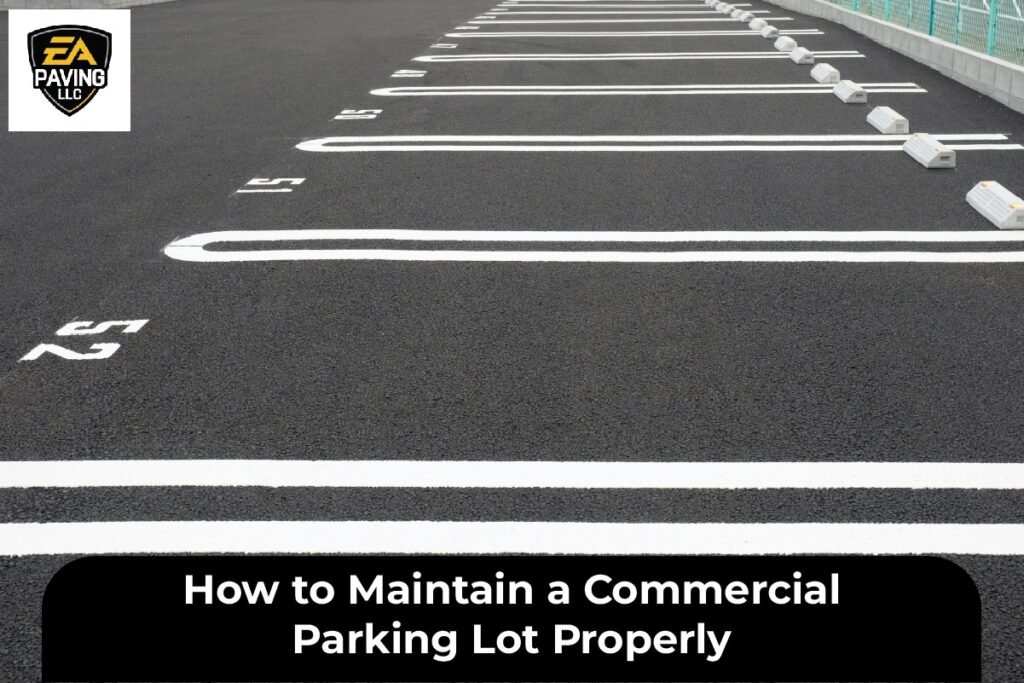
Why Commercial Parking Lot Maintenance Matters
Proper parking lot maintenance is crucial for several reasons:
- Protects pavement lifespan: Regular care prevents premature asphalt failure.
- Reduces repair costs: Addressing minor issues early is cheaper than major repairs.
- Enhances safety by preventing slips, trips, and accidents caused by potholes and debris.
- Boosts business image: A clean, well-marked lot creates a positive first impression.
- Ensures compliance: ADA requirements and signage must be maintained.
Failing to maintain a parking lot can result in expensive lawsuits, lost business, and faster pavement deterioration.
Understanding Your Parking Lot Components
To maintain a commercial parking lot effectively, you must understand its key components:
- Asphalt surface: The main pavement area that requires sealcoating, crack repair, and resurfacing.
- Striping & markings: Painted lines and symbols for traffic control and parking spaces.
- Signage: Stop signs, directional signs, and ADA compliance indicators.
- Lighting: Safety and visibility at night.
- Drainage & curbs: Proper drainage and curbs prevent erosion and standing water.
- ADA features include ramps, reserved spaces, and tactile indicators to ensure compliance.
Each component plays a role in both safety and aesthetics, making them critical to regular maintenance.
Daily & Weekly Maintenance Tasks
Consistent attention prevents minor issues from escalating. Daily and weekly tasks include:
- Sweeping or blowing debris from the asphalt surface
- Removing trash and maintaining walkways
- Inspecting for new cracks, potholes, or surface damage
- Checking drains for clogs or standing water
Even small daily actions can prevent moisture infiltration, surface staining, and other common issues.
Monthly & Quarterly Maintenance Checklist
Every month or quarter, parking lot owners should perform more thorough inspections and maintenance:
- Sweep or power wash the surface to remove dirt and debris
- Inspect cracks and edges for expansion
- Clean oil or chemical spills promptly
- Evaluate striping, signage, and ADA markings
- Check lighting and replace bulbs if needed
These periodic checks reduce long-term repair costs and ensure your lot remains safe and functional year-round.
Seasonal Maintenance Guide
Different seasons present unique challenges. Follow this seasonal maintenance plan:
Spring
- Repair damage from winter freeze-thaw cycles
- Seal cracks and potholes
- Re-stripe faded lines
Summer
- Check for heat-related asphalt softening or rutting
- Apply sealcoating if needed
- Clean and maintain drains for summer rains
Fall
- Clear leaves and debris
- Prepare surfaces for colder temperatures
- Inspect curbs, ramps, and drainage
Winter
- Implement snow and ice removal plan
- Use safe de-icing methods to prevent asphalt damage
- Check lighting to maintain visibility during long nights
Seasonal planning helps prevent damage from weather extremes.
Common Parking Lot Maintenance Procedures
Regular procedures protect both the asphalt surface and the overall safety of your lot:
- Crack sealing & filling: Stops water infiltration and prevents cracks from expanding.
- Pothole repair & asphalt patchwork: Addresses structural damage promptly.
- Sealcoating: Protects against UV rays, water, and chemicals.
- Striping & ADA line painting: Keeps parking spaces clear and compliant.
- Drainage cleaning & curb repair: Prevents standing water and erosion.
Performing these procedures proactively extends its lifespan and makes it look professional.
DIY vs Professional Maintenance
Knowing which tasks can be done in-house and which require professionals helps manage costs and improve efficiency. DIY
- Sweeping and removing debris
- Minor crack inspections
- Trash collection and spill cleanup
Professional Services:
- Sealcoating
- Asphalt resurfacing and major repairs
- Line striping and ADA compliance upgrades
- Pothole repair and structural fixes
A combination of DIY care and professional service ensures optimal parking lot maintenance.
Safety Tips for Parking Lot Maintenance
Safety should be a priority during maintenance and daily use:
- Ensure adequate lighting at night
- Check for and fix slip- or trip-hazards.
- Maintain clear ADA access and ramps
- Keep entry/exit lanes clearly marked
- Communicate maintenance schedules to employees and visitors
A safe parking lot reduces liability and enhances customer confidence.
Budgeting & Cost Considerations
Planning a maintenance budget is essential. Consider:
- Regular maintenance costs vs. major repairs
- Frequency of sealcoating, striping, and repairs
- Cost savings from preventive measures
- Long-term value of well-maintained asphalt
Preventive maintenance is always more cost-effective than replacing a failed lot.
How to Evaluate Parking Lot Condition
Evaluate your parking lot annually or after severe weather:
- Good: Smooth surface, minor cracks, fresh striping
- Fair: Small cracks or faded markings, minor surface wear
- Poor: Widespread cracks, potholes, drainage problems
- Replace or Resurface: Structural failure, extensive wear, safety hazards
Regular evaluations help determine whether repairs or resurfacing are needed.
Final Thoughts
Proper maintenance is essential to preserving the life, appearance, and safety of a commercial parking lot. By following daily, weekly, monthly, and seasonal routines—and combining DIY care with professional services—you can protect your investment, reduce liability, and maintain a welcoming environment for customers and employees.
Preventive maintenance, timely repairs, and consistent inspections are key to keeping your commercial parking lot in top condition. Investing in proper upkeep today saves thousands in repairs tomorrow.
FAQs
Q1: How often should a commercial parking lot be maintained?
Ans: Regular inspections and minor maintenance should be weekly or monthly, with professional sealcoating and major repairs every 2–3 years.
Q2: What causes asphalt parking lots to fail early?
Ans: Common causes include poor drainage, heavy traffic, untreated cracks, UV damage, and neglect of regular maintenance.
Q3: Does sealcoating extend the lifespan of a parking lot?
Ans: Yes. Sealcoating protects asphalt from moisture, UV rays, and chemicals, extending the lifespan by 5–10 years.
Q4: What’s the best season for parking lot repairs?
Ans: Spring and summer are ideal for repairs and sealcoating because temperatures are moderate and surfaces dry quickly.
Q5: How much does parking lot maintenance cost?
Ans: Costs vary by size and required work. Routine cleaning is minimal, while sealcoating, crack filling, and resurfacing require professional investment.