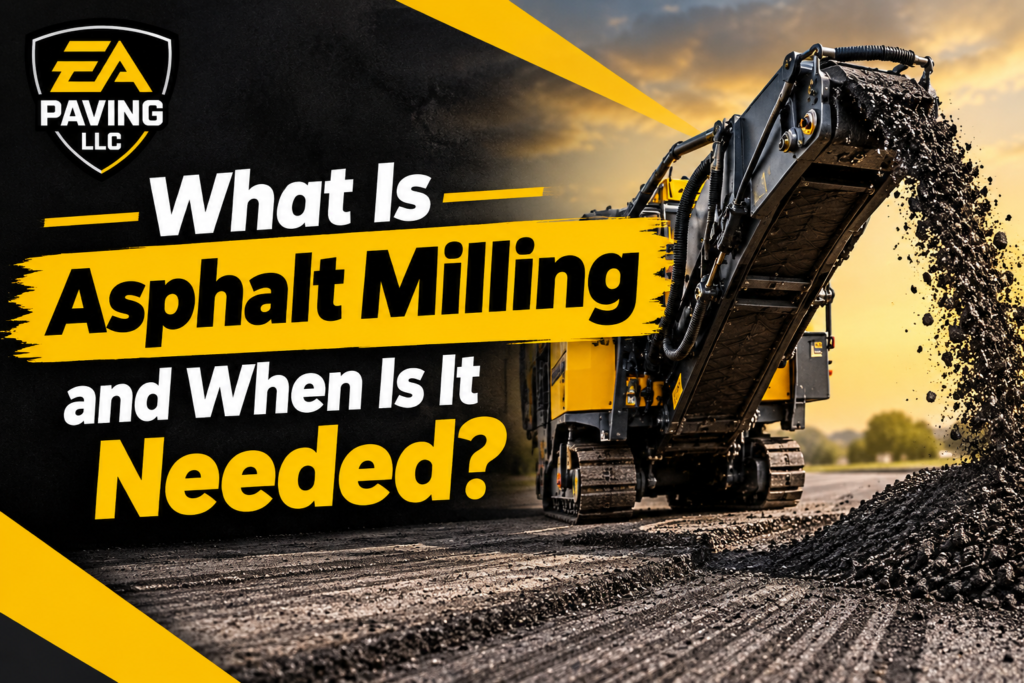
Asphalt milling is the controlled removal of the top layer of an existing asphalt surface using a specialized machine. It is used to restore damaged pavement, correct surface irregularities, and prepare the road for a new overlay. This guide from EA Paving explains how the process works, what it costs, and when your property needs it.
What Is Asphalt Milling?
Asphalt milling is the process of removing part or all of the surface layer of a paved area such as a road, driveway, or parking lot. A milling machine uses a rotating drum fitted with carbide-tipped teeth to grind away the damaged asphalt at a precise depth. The removed material is called reclaimed asphalt pavement (RAP), which can be recycled into new asphalt mixes. Asphalt milling is also known as cold milling, cold planing, or pavement profiling.
How Does the Asphalt Milling Process Work?
The milling process follows a clear sequence: assess, grind, collect, clean, and pave. A crew first inspects the pavement and determines the correct milling depth. The milling machine then removes the damaged layer. The millings are loaded into dump trucks for recycling. The exposed surface is cleaned, and new asphalt is laid on top.
Step-by-Step Milling Process
- Assess the pavement: The crew evaluates the surface condition and identifies the milling depth.
- Grind the surface: The milling machine’s rotating drum removes the damaged asphalt at the chosen depth.
- Collect the millings: The RAP material is loaded into dump trucks for transport and recycling.
- Clean the surface: The milled area is power-cleaned to remove dust and debris.
- Apply the overlay: New asphalt is laid and compacted on the prepared surface.
A single pass can remove up to a 2-inch thickness of asphalt. The machine’s milling drum is the key component, and the depth is controlled precisely to match the project requirements.
What Is the Difference Between Cold Milling, Cold Planing, and Asphalt Milling?
There is no functional difference. Cold milling, cold planing, asphalt milling, and pavement profiling all describe the same process: removing asphalt pavement without heating it first. The term “cold” distinguishes this method from older hot-milling techniques that heated the pavement before grinding. Modern cold milling equipment has made hot milling largely obsolete.
When Is Asphalt Milling Needed?
Asphalt milling is needed when the surface layer of pavement has deteriorated, but the base structure remains sound. It is also used to correct surface irregularities and to prepare a surface for a new overlay. Common situations include:
- Surface cracking and raveling: Aggregate separating from the binder.
- Rutting and shoving: Low spots or washboard-like deformations in the wheel path.
- Bleeding: Asphalt binder rising to the surface.
- Ride quality issues: Uneven surfaces, bumps, or depressions.
- Drainage correction: Adjusting slope or camber to improve water flow.
- Height adjustments: Maintaining clearance near curbs, manholes, and bridges.
Milling is also used when the existing pavement is too high and needs to be lowered before resurfacing.
How Much Does Asphalt Milling Cost in 2026?
Asphalt milling costs between $1.50 and $4.50 per square yard for standard 1.5 to 2-inch milling. Full-depth milling runs $3 to $7 per square yard, and micro-milling costs $4 to $9 per square yard. Mobilization fees add $1 or more per square yard. A professional milling contractor charges $0.75 to $2.50 per square foot for driveway milling.
| Service Type | Cost Range |
| Standard milling (1.5–2 inches) | $1.50–$4.50 per square yard |
| Full-depth milling | $3–$7 per square yard |
| Micro-milling | $4–$9 per square yard |
| Driveway milling (contractor) | $0.75–$2.50 per square foot |
| Asphalt millings (RAP material) | $10–$40 per ton |
Asphalt millings cost $10 to $25 per ton in the Southeast and Midwest and $20 to $40 per ton in the Northeast and West Coast. Milling is generally the lowest-cost rehabilitation option with the least traffic disruption.
What Are the Benefits of Asphalt Milling?
Asphalt milling offers several advantages over full removal and replacement. It is faster, less disruptive, and more cost-effective. It also produces recycled material that reduces the need for virgin aggregate and asphalt binder. Milling preserves the underlying base structure and maintains drainage features, curb reveals, and overhead clearances.
- Cost savings: Milling and resurfacing costs less than full-depth reconstruction.
- Less disruption: Traffic can often use the road sooner.
- Recycling: RAP reduces environmental impact and material costs.
- Preserves base: The underlying pavement structure stays intact.
- Corrects distress: Removes surface defects before they spread deeper.
What Is Reclaimed Asphalt Pavement (RAP)?
Reclaimed asphalt pavement (RAP) is the ground-up material produced during milling. It contains old asphalt binder and aggregate. RAP is recycled into new hot-mix asphalt, cold mix, and base course material. Using RAP reduces environmental burdens by an average of 27% and economic costs by 25% compared to mixes with no RAP. It also conserves energy and lowers transportation costs for virgin aggregate.
What Should You Do Right Now?
If your asphalt surface shows cracking, rutting, or uneven areas, do not wait for the damage to spread. Milling can restore the surface and extend the life of your pavement at a fraction of the cost of full replacement. Contact a qualified paving contractor to assess your pavement and recommend the right milling depth.
At EA Paving, we specialize in asphalt milling, resurfacing, and pavement rehabilitation. Our team handles the full process, from assessment to final compaction, using modern milling equipment and recycled materials. Contact us today to schedule your pavement evaluation.
FAQs
Q1: How deep can a milling machine cut in one pass?
A standard milling machine can remove up to a 2-inch thickness of asphalt in a single pass. Deeper cuts require multiple passes. The exact depth depends on the machine’s size, the drum configuration, and the pavement condition.
Q2: Can milled asphalt be used for driveways?
Yes. Asphalt millings (RAP) are a popular low-cost driveway material. They cost $10 to $40 per ton and provide a durable, dust-free surface when properly compacted. They are not as smooth as new asphalt but are far more affordable.
Q3: How long does asphalt milling take?
Most residential driveway milling projects finish in one day. Larger commercial or roadway projects may take several days, depending on the area size, milling depth, and site access. Milling is typically faster than full-depth removal.
Q4: Is asphalt milling better than a full overlay?
It depends on the pavement condition. Milling removes surface distress and allows a uniform overlay thickness. A full overlay without milling may not bond properly and can fail sooner. Milling is the preferred preparation step for most overlay projects.
Q5: Does milling weaken the pavement structure?
No, when performed correctly. Milling removes only the damaged surface layer and preserves the sound base beneath. Removing excessive material can weaken the structure, which is why precise depth control is essential. The pavement should be overlaid soon after milling.