
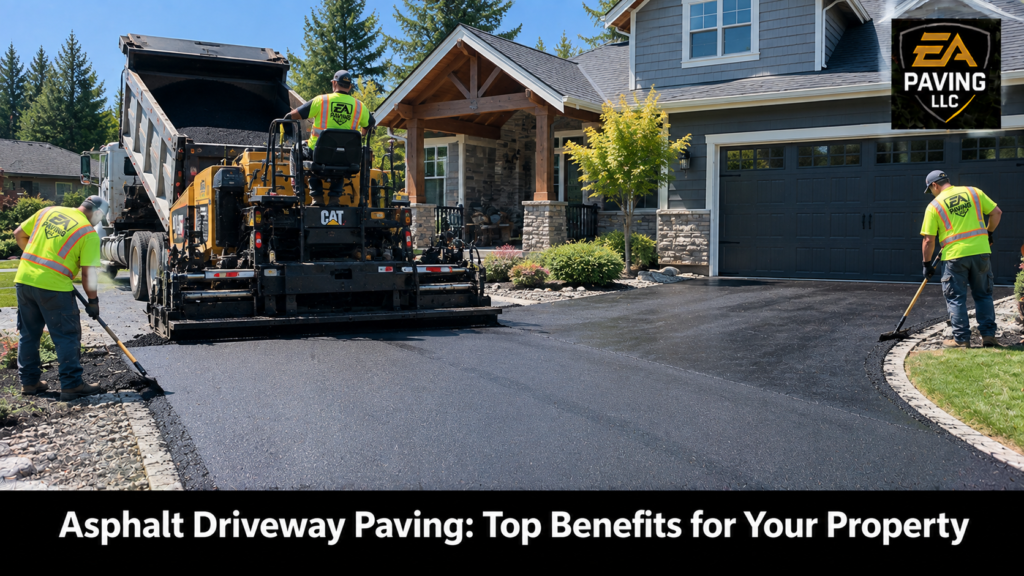
A driveway plays an important role in both the appearance and everyday function of a property. Choosing the right paving material can provide a smoother surface, improve curb appeal, and help homeowners manage long-term maintenance.
For property owners in Salem, Keizer, and surrounding Oregon communities, asphalt driveway paving is a practical option. Its durability, lower initial cost, relatively quick installation, and straightforward maintenance make it suitable for new driveways and replacement projects. EA Paving LLC provides residential asphalt paving services tailored to local property needs.
What Is Asphalt Driveway Paving?
Asphalt driveway paving involves installing a mixture of stone, sand, and liquid asphalt to create a smooth, durable surface.
Proper installation begins with preparing the site. The ground is graded and compacted to establish a stable foundation before the asphalt is installed. Careful preparation is important because the quality of the base can affect how well the finished driveway performs.
Asphalt also provides flexibility during temperature changes, making it a practical paving material for Oregon’s changing weather conditions.
Key Benefits of Asphalt Driveway Paving
Property owners should consider cost, durability, installation time, appearance, and maintenance when selecting driveway material. Asphalt offers advantages in each of these areas.
Durability and Long-Term Performance
Based on the original estimates, a properly installed and maintained asphalt driveway can last approximately 15 to 30 years.
Asphalt’s flexibility allows the surface to respond to temperature changes. Regular maintenance and timely repairs can also help property owners get more useful life from the pavement.
Actual lifespan depends on installation quality, traffic, weather exposure, and ongoing maintenance.
Cost-Effective Driveway Installation
Budget is often a major consideration when planning residential driveway paving. Asphalt generally has a lower initial installation cost than concrete.
The final driveway paving cost in Oregon will depend on factors such as driveway size, site preparation, existing pavement conditions, and project requirements.
Rather than comparing materials on installation price alone, homeowners should also consider expected maintenance and long-term use.
Faster Installation
Asphalt typically requires less installation time than concrete. Depending on the size and complexity of the project, an experienced paving contractor may complete an asphalt driveway within a few days.
Concrete generally requires a longer setting and curing period. A shorter paving process can be helpful when homeowners want to limit disruption around their property.
Improved Curb Appeal
A worn driveway can affect the overall appearance of a property. Fresh asphalt provides a smooth, dark surface that can create a cleaner and more finished look.
For homeowners planning a new driveway installation or replacing deteriorated pavement, asphalt can improve both function and curb appeal.
When Is Asphalt Driveway Paving a Good Choice?
Asphalt can be used for several types of driveway projects, including new installations and replacements.
New Driveway Installation
For a new home or an unpaved area, asphalt provides a versatile option that can accommodate different driveway layouts. Proper grading, compaction, and base preparation should take place before the asphalt surface is installed.
Driveway Replacement
Large cracks, potholes, uneven areas, and significant surface wear may indicate that an older driveway needs professional attention.
Not every damaged driveway requires complete replacement. A paving contractor can inspect the existing surface and determine whether repair, resurfacing, or replacement is the more appropriate solution.
Asphalt vs. Concrete Driveways
Both asphalt and concrete have advantages, so the right material depends on the property owner’s priorities.
Asphalt generally offers a lower upfront cost and quicker installation. Its flexibility can also be useful where pavement experiences changing temperatures.
Concrete can provide a different appearance and may suit homeowners with other priorities. When comparing an asphalt vs. concrete driveway, consider initial cost, maintenance expectations, appearance, climate, and expected lifespan.
How to Maintain an Asphalt Driveway
Routine maintenance can help protect an asphalt driveway and identify deterioration before it becomes more extensive.
Based on the original maintenance recommendations, sealcoating may be considered every two to three years, depending on pavement condition and environmental exposure. Sealcoating can provide additional protection against water and UV exposure.
Homeowners should also inspect the driveway periodically for cracks or signs of wear. Addressing smaller problems promptly may prevent them from becoming larger repairs.
Keeping the pavement clear of debris, oil stains, and other contaminants is another simple part of regular asphalt maintenance.
Choosing a Local Asphalt Paving Contractor
Proper installation has a major influence on driveway performance. When selecting a local paving contractor, consider relevant experience, customer reviews, licensing, and the clarity of the estimate.
The quote should explain the work involved so you understand what is included in the project.
EA Paving LLC provides asphalt installation in Salem, Keizer, and surrounding areas for homeowners considering new driveway paving or replacement.
Conclusion
Asphalt driveway paving combines durability, affordability, faster installation, and a clean finished appearance. With proper installation and routine maintenance, it can provide a long-lasting surface for residential properties.
If you are considering a new driveway or replacing an existing surface in Salem or the surrounding area, contact EA Paving LLC at (503) 967-9995 for a consultation and free estimate.
Frequently Asked Questions
1. How often should an asphalt driveway be sealed?
Based on the original recommendations, sealcoating may be considered every two to three years, depending on wear, pavement condition, and environmental exposure.
2. Can asphalt be installed over an existing concrete driveway?
It may be possible, but the existing concrete must first be professionally assessed and properly prepared to determine whether asphalt installation is appropriate.
3. How long does an asphalt driveway last?
A properly installed and maintained asphalt driveway may last approximately 15 to 30 years. Actual lifespan depends on use, weather, installation, and maintenance.
4. When should I consider driveway replacement?
Large cracks, potholes, uneven pavement, and extensive surface wear can indicate that professional assessment is needed to determine whether repair or replacement is appropriate.
5. Are permits required for a new driveway in Salem?
The original information indicates that permits are typically required for new driveway installations. Property owners should confirm current local requirements or discuss them with their contractor before work begins.