
Asphalt driveways and paved surfaces are a common feature of Oregon homes, providing durability, smooth driving surfaces, and improved curb appeal. However, Oregon homeowners face unique challenges with asphalt due to the state’s wet winters, freeze-thaw cycles, and seasonal temperature fluctuations.
Over time, these factors can cause a variety of asphalt issues, from small surface cracks to larger structural problems like potholes and alligator cracking. Understanding these common issues is the first step in maintaining a durable, long-lasting asphalt surface and avoiding costly repairs. In this guide, we’ll explore the most frequent asphalt problems in Oregon, their causes, and strategies to prevent or repair them.
Why Asphalt Fails in Oregon
Before diving into specific issues, it’s essential to understand the underlying factors that contribute to asphalt deterioration in Oregon:
- Weather Extremes—Rain, freezing temperatures, and occasional heat can weaken asphalt.
- Moisture & Drainage—Standing water and poor drainage accelerate cracks and potholes.
- Traffic & Load Stress – Daily vehicle weight, especially from heavy trucks, causes stress on pavement.
- Subgrade & Installation Issues – Poor base preparation or installation mistakes can lead to premature failure.
- Lack of Maintenance—Delaying sealcoating, crack repair, or general upkeep increases damage over time.
By understanding these causes, homeowners can proactively protect their asphalt surfaces.
Common Asphalt Issues Oregon Homeowners Face
1. Cracks (Surface, Thermal, and Reflective)
Cracks are the most common and visible asphalt issue. They can appear in several forms:
- Hairline Surface Cracks: Small, superficial cracks caused by aging asphalt and UV exposure.
- Thermal Cracks: Result from asphalt expanding and contracting with temperature changes.
- Reflective Cracks: Appear when cracks in the base or previous layers reflect through the new asphalt surface.
Causes: Freeze-thaw cycles, moisture penetration, traffic stress, and poor initial installation.
Consequences: If left untreated, cracks allow water to penetrate and reach the base layer, leading to more serious damage and eventual potholes.
Tip: Fill cracks promptly and schedule routine sealcoating to prevent water damage.
2. Potholes and Depressions
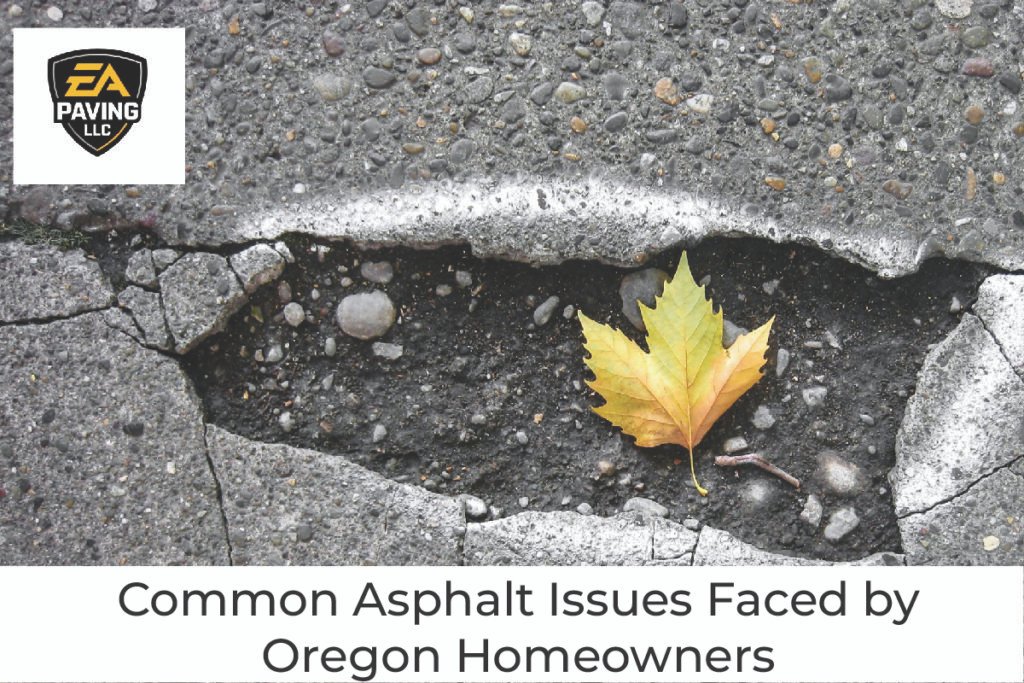
Potholes are areas where asphalt has collapsed due to water infiltration and repeated traffic stress. Depressions, or “birdbaths,” are low spots caused by uneven settling.
Causes:
- Water weakens the asphalt base, especially after heavy rain or snow.
- Repeated vehicle pressure over compromised areas.
Impact: Potholes and depressions not only damage vehicles but also accelerate further asphalt deterioration.
Solution: Professional repair with proper base compaction is crucial to prevent recurring potholes.
3. Alligator (Fatigue) Cracking
Alligator cracking, also known as fatigue cracking, forms a web-like pattern resembling an alligator’s skin.
Causes:
- Weak subgrade foundation
- Overloaded pavement
- Lack of maintenance
Significance: This is a structural problem, indicating that the asphalt’s foundation may need reinforcement or partial replacement.
4. Surface Ravelling & Oxidation
Ravelling occurs when the asphalt surface loses its binder, causing aggregates to loosen and fall off.
Causes:
- UV radiation from the sun
- Age-related binder oxidation
- Heavy traffic is wearing down the surface.
Consequences: Reduced surface durability, rough texture, and increased water infiltration.
Tip: Sealcoating helps restore the asphalt surface and protect it from UV damage.
5. Moisture & Water Damage
Excess water is one of the most damaging elements for asphalt in Oregon. Standing water or poor drainage allows water to seep into cracks and the base layer.
Results:
- Softened subgrade
- Pothole formation
- Premature asphalt failure
Prevention: Ensure proper grading and drainage; repair small cracks before water penetration becomes severe.
6. Freeze-Thaw Cycle Damage
Water that penetrates asphalt expands when frozen, creating pressure that widens cracks and causes surface damage.
Impact in Oregon: Frequent winter rain followed by freezing temperatures can rapidly accelerate asphalt deterioration if not properly maintained.
Maintenance Tip: Regular inspection and timely crack repair minimize freeze-thaw damage.
7. UV and Heat Stress
Oregon may not be extremely hot, but summer UV rays can dry out the asphalt binder, causing brittleness and surface cracking. Heat can also soften asphalt, leading to rutting under heavy loads.
Prevention: Sealcoating creates a protective barrier against UV damage and helps maintain flexibility.
8. Subgrade and Drainage Problems
A stable subgrade is essential for asphalt longevity. Water accumulation or poor soil compaction under the asphalt can lead to:
- Uneven settling
- Depressions and low spots
- Cracking and structural failures
Solution: Professional assessment of base conditions during installation and regular inspections are key.
Maintenance Mistakes That Worsen Asphalt Issues
Many homeowners unintentionally accelerate asphalt damage by making maintenance errors:
- Ignoring small cracks and surface issues
- Delaying sealcoating and regular inspections
- Using harsh snow removal methods or metal shovels
- DIY patching without proper materials or technique
Correcting these habits significantly prolongs asphalt life.
Seasonal Asphalt Care Tips for Oregon Homeowners
Spring
- Inspect for winter damage and fill cracks early
- Clear debris and ensure drainage systems are functioning
Summer
- Schedule sealcoating and remove dirt and oil stains.
- Inspect for any surface softening from heat.
Fall
- Prepare for rain and freeze-thaw cycles.
- Refill cracks and ensure gutters and slopes direct water away from the asphalt.
Winter
- Use asphalt-safe ice melt.
- Avoid excessive plowing or scraping with metal tools.
- Monitor for standing water or pooling areas.
Seasonal care tailored to Oregon’s climate can prevent costly repairs.
When to Call a Professional
While homeowners can handle small maintenance tasks, certain situations require professional intervention:
- Extensive cracks or alligator cracking
- Large potholes or depressions
- Uneven settling or base failures
- Persistent drainage issues
- Repeated freeze-thaw damage
A licensed asphalt contractor can assess the problem, recommend the best solution, and ensure long-term durability.
Conclusion
Oregon homeowners face unique challenges with asphalt due to rain, freeze-thaw cycles, UV exposure, and traffic stress. Common issues include cracks, potholes, alligator cracking, surface ravelling, moisture damage, and subgrade problems.
By understanding these issues, performing regular maintenance, and knowing when to call a professional, homeowners can protect their investment and enjoy durable, long-lasting asphalt surfaces. Proactive care, such as sealcoating, proper drainage, and timely repair, ensures that your asphalt remains smooth, safe, and visually appealing for years to come.
FAQ
Q: What causes asphalt to crack in Oregon?
A: Cracks are typically caused by moisture penetration, temperature fluctuations, and freeze-thaw cycles standard in Oregon’s climate.
Q: Why do potholes form on asphalt surfaces?
A: Potholes form when water infiltrates the asphalt and softens the base layer. Repeated vehicle traffic then causes the surface to collapse.
Q: How can I prevent moisture damage to my asphalt driveway?
A: Ensure proper drainage, repair cracks promptly, and schedule routine sealcoating to protect against water infiltration.
Q: What is freeze-thaw damage, and why is it significant?
A: Freeze-thaw damage occurs when water enters cracks, freezes, expands, and worsens pavement deterioration. It is especially common in Oregon winters.
Q: How often should Oregon homeowners inspect their asphalt?
A: Inspect asphalt after seasonal changes, particularly after winter and heavy rains, to detect early signs of damage.