You know that moment when you’re driving on a road that feels smooth, safe, and almost brand-new—yet you know it wasn’t completely rebuilt? That’s the power of a smart repair process called milling and overlay. Instead of tearing everything out and starting from scratch, this technique gives worn-out pavement a clean, fresh, and long-lasting surface without breaking the bank. If you’ve ever wondered why so many property owners, city planners, and paving professionals swear by this method, you’re about to find out.
Across the U.S., milling and overlay contractors have embraced this efficient, cost-effective process because it extends pavement life, enhances performance, and avoids the heavy price tag of full reconstruction. And in an age where budgets matter—and downtime matters even more—milling and overlay is quickly becoming the preferred choice for highways, parking lots, and commercial spaces. This guide breaks down the advantages, the process, and how expert asphalt milling contractors can transform your pavement completely.
Understanding What Makes Milling and Overlay So Effective
To understand why this method is such a game-changer, it helps to look at the basics. Pavement milling and overlay involve removing the top layer of damaged asphalt and applying a fresh new layer. This upgraded surface bonds tightly to the remaining structure and restores strength, performance, and appearance.
Unlike full reconstruction—which requires removing the entire pavement system—mill and overlay paving focuses only on the sections that actually need attention. This makes repairs easier, faster, and more affordable. Even better, the process reduces environmental waste because it recycles the asphalt that’s removed.
Many milling and resurfacing contractors describe it as “renewing your pavement without replacing its foundation,” and they’re exactly right. The strong base remains intact, while the surface becomes smoother, safer, and more durable.
How Milling Works and Why It Matters
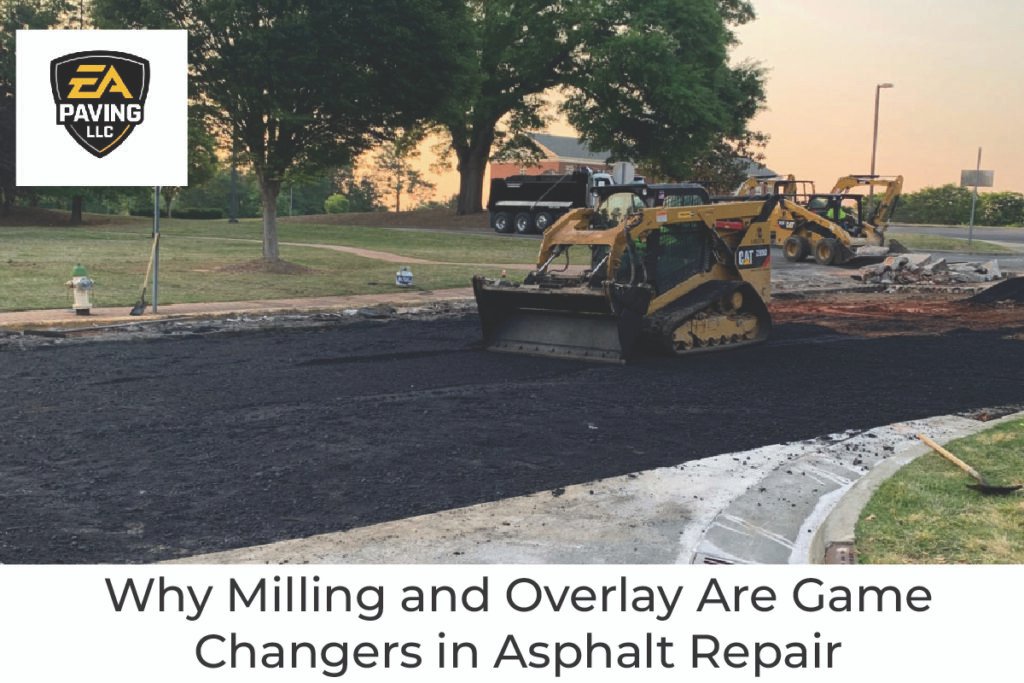
Milling may sound technical, but the concept is simple: heavy-duty machines grind and remove the damaged asphalt to a precise depth. This eliminates cracks, ruts, bumps, and surface flaws that can shorten pavement life.
One of the biggest advantages is customization. Contractors can mill the pavement to exactly the right depth—whether that’s a quarter inch or several inches. This level of precision is especially useful for preventing issues like drainage problems, standing water, and uneven surfaces.
Because the machines remove only the weakened layer, property owners avoid unnecessary costs. Plus, the removed asphalt is reusable. It gets trucked to recycling centers and used to create new mixes, making this process environmentally responsible.
Road milling and overlay techniques are especially common on highways and city roads because they correct structural flaws quickly with minimal traffic disruption.
Why Overlay Creates a Strong, Long-Lasting Finish
After milling is complete, the fresh overlay begins. This new layer of asphalt bonds to the prepared surface, creating a strong, smooth, and durable finish. Skilled asphalt overlay contractors ensure proper compaction, temperature management, and even distribution so the new surface lasts years longer than a simple patch job.
Overlaying adds protective thickness to the pavement, improves ride quality, and boosts visual appeal. It’s like giving your asphalt a new skin—strong, flexible, and ready to withstand heavy loads.
This method is ideal for commercial parking lots, industrial complexes, and municipal roads because it provides longevity at a fraction of the cost of complete reconstruction.
Top Benefits That Make Milling and Overlay a Game-Changer
Cost Savings that Truly Matter
Full reconstruction might sound impressive, but the price tag can be painful. Milling and overlay deliver comparable performance without major excavation costs. Property owners routinely save 40–60% by choosing mill and overlay paving.
Faster Completion and Minimal Disruption
Nobody wants long closures or downtime. Because the base layer remains untouched, the repair timeline is drastically shorter. Businesses stay open, traffic keeps moving, and the overall project stays efficient.
Better Drainage and Smoother Surfaces
Uneven pavement leads to pooling water, potholes, and premature breakdown. Milling solves this by correcting slope issues and restoring proper drainage.
Extended Pavement Life
With proper installation and maintenance, the fresh surface can last more than a decade. Many milling and resurfacing contractors use advanced materials that boost the lifespan even more.
When You Should Choose Milling and Overlay Over Reconstruction
Not every pavement needs a full rebuild. In fact, most don’t. If the underlying base is still structurally sound, milling and overlay offer the best balance of value and performance.
Choose this method if:
- The surface has cracks, ruts, or worn areas
- The base layer is stable and strong
- The pavement needs a facelift, not a full rebuild
- Budget and time are important factors
On the other hand, full reconstruction is necessary only when deep structural issues affect the pavement foundation. Many asphalt milling contractors will evaluate your site and recommend the smartest approach based on your pavement’s condition.
Why Choosing the Right Contractor Is Everything
Milling and overlay services rely heavily on expertise. Precision milling, proper bonding, smooth compaction—it all requires skill, experience, and high-quality equipment.
Working with trusted pros, such as those at EA Paving, ensures that every step meets industry standards. Their teams specialize in asphalt milling and offer complete milling and overlay services that deliver long-lasting results.
With experienced teams, the differences are noticeable: cleaner edges, precise milling depth, better compaction, improved longevity, and stronger performance.
Sustainable, Eco-Friendly, and Smart for the Future
Asphalt milling is one of the most eco-friendly pavement repair methods. Because the removed material is 100% recyclable, the carbon footprint is drastically reduced. Many cities choose road milling and overlay as part of their sustainability initiatives.
Overlaying uses fewer new materials, which also reduces environmental impact. It’s a smart, modern approach to pavement management—effective today and responsible for the future.
Final Thoughts
Milling and overlay aren’t just repair methods—they’re long-term pavement strategies. They preserve strong foundations, improve surface performance, reduce waste, save money, and deliver professional results that last. Whether you’re managing commercial property, planning municipal road upgrades, or renovating a parking lot, this method gives you reliable, cost-effective, and efficient pavement restoration.
Partnering with skilled milling and overlay contractors ensures your pavement gets the attention it deserves. And with trusted teams like EA Paving, you can expect quality that stands the test of time.
FAQs
1. How long does a milling and overlay project take?
Most projects take one to three days depending on the size and depth of milling required. It’s much faster than full reconstruction.
2. How long will the new asphalt surface last?
With quality installation, mill and overlay surfaces can last 10–15 years or more with routine maintenance.
3. Is milling noisy or messy?
The equipment is loud, but professional crews keep the site clean. Reputable asphalt milling contractors ensure efficient dust and debris control.
4. Can milling fix drainage problems?
Yes. Milling allows contractors to re-shape and re-grade the surface, improving drainage and preventing standing water.
5. Is milling environmentally friendly?
Absolutely. Removed asphalt is 100% recyclable, making this one of the greenest pavement repair methods.