
If you’re planning a new parking lot or replacing an old one, one of the biggest decisions you’ll face is choosing the right material. It’s not just about how it looks—it affects cost, durability, maintenance, and its ability to handle traffic over time.
Many property owners assume there’s a single clear answer, but the truth is that the “best” material depends on your specific needs. EA Paving has worked on a wide range of commercial projects, and the right choice always comes down to usage, budget, and long-term expectations.
This guide breaks down the most common parking lot materials so you can make a decision that fits your property.
Why Material Choice Matters
Your parking lot deals with constant pressure—vehicles, weather, and daily wear. The material you choose determines how well it handles all of that.
A poor choice can lead to early cracks, frequent repairs, and higher long-term costs. On the other hand, the right material can last for decades with manageable maintenance.
Common Parking Lot Materials
There are four main materials used in commercial parking lots. Each comes with its strengths and limitations.
1. Asphalt Parking Lots
Asphalt is one of the most widely used materials for parking lots. It’s known for its flexibility and relatively lower upfront cost.
- Typically lasts 15–25 years with maintenance.
- Handles temperature changes better due to flexibility
- Faster installation compared to other materials
- Easier and less expensive to repair
Asphalt works well for most commercial properties, especially where quick installation and lower initial cost are important. However, it does require regular maintenance such as seal coating and crack repairs.
2. Concrete Parking Lots
Concrete is another popular option, especially for heavy-use areas.
- Can last 30–40 years or more
- Handles heavy loads better than asphalt
- Requires less frequent maintenance
- Resistant to oil and chemical spills
Concrete is more rigid, which makes it strong but also more prone to cracking in extreme weather. It also has a higher upfront cost and takes longer to install.
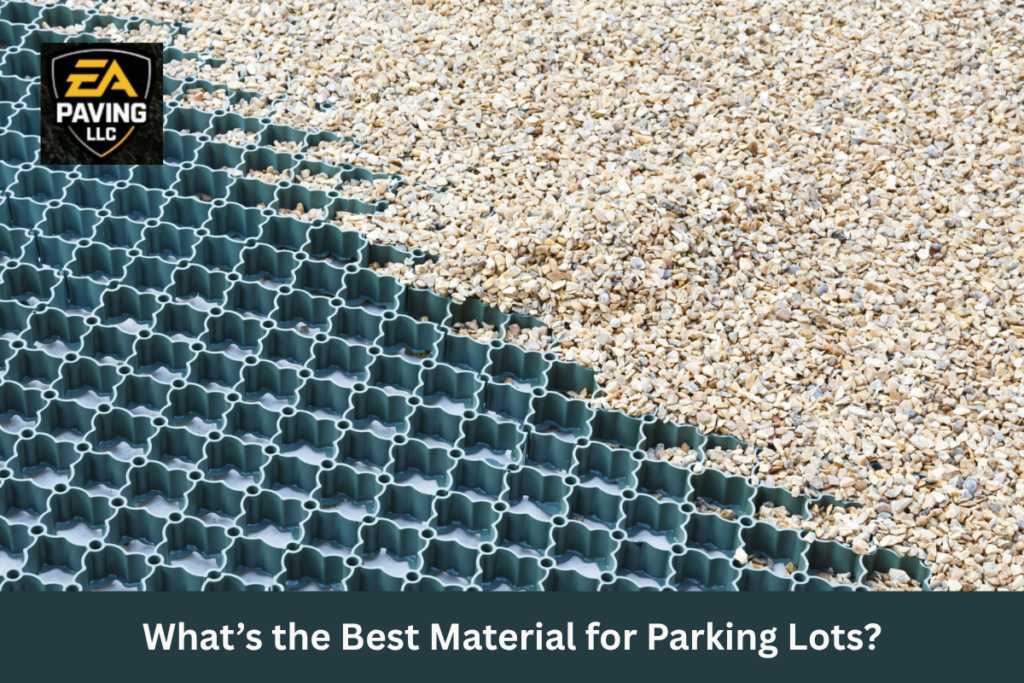
3. Gravel Parking Lots
Gravel is often used for temporary or low-traffic parking areas.
- Lower upfront cost
- Good drainage
- Quick installation
However, gravel requires frequent maintenance. It can shift, create uneven surfaces, and may not be suitable for high-traffic commercial properties.
4. Paver Parking Lots
Pavers are individual blocks placed together to create a surface.
- Can last 25–50 years
- Visually appealing
- Easy to repair by replacing individual pieces
Pavers are usually chosen for decorative or high-end properties. They come with a higher cost and require careful installation.
Asphalt vs. Concrete: Which Is Better?
This is one of the most common comparisons when choosing a parking lot material.
Asphalt is often preferred when:
- You need a quicker installation
- The budget is limited
- Repairs and maintenance need to be simple
Concrete is often chosen when:
- The area handles heavy trucks or equipment
- A long lifespan is a priority
- Maintenance needs to be minimal
Both materials have their place, and the right choice depends on how the parking lot will be used.
Key Factors to Consider Before Choosing
Choosing a material isn’t just about lifespan. Several practical factors should guide your decision.
1. Traffic Load
If your parking lot handles heavy trucks or frequent traffic, you need a material that can handle that pressure. Concrete is often better for heavy loads, while asphalt works well for standard vehicle traffic.
2. Budget
Initial cost and long-term expenses both matter.
- Asphalt has a lower upfront cost but needs regular maintenance
- Concrete costs more initially but requires less frequent upkeep
Balancing short-term and long-term costs is important.
3. Climate
Weather conditions can affect how materials perform.
- Asphalt handles temperature changes better
- Concrete may crack in extreme cold
- Gravel works well in areas with good drainage
Your local climate should always be part of the decision.
4. Maintenance Requirements
Every material requires some level of maintenance.
- Asphalt needs sealing and crack repairs
- Concrete needs occasional cleaning and joint maintenance
- Gravel needs leveling and refilling
Understanding maintenance needs helps you plan.
5. Appearance
The appearance of your parking lot can influence the perception of your property.
- Asphalt gives a smooth, clean appearance
- Concrete looks brighter and more uniform
- Pavers create a more decorative finish
For commercial properties, appearance can influence customer impressions.
Which Material Is Best for Your Property?
There is no single answer that fits every situation.
- For most commercial parking lots, asphalt is a practical choice due to its balance of cost, flexibility, and repair options.
- For heavy-duty use, concrete may be more suitable
- For temporary or low-budget projects, gravel can work
- For decorative or premium spaces, pavers may be preferred
EA Paving helps property owners evaluate these factors and choose the material that fits their needs and budget.
How Installation Affects Material Performance
Even the best material won’t perform well if it’s not installed correctly.
- Poor base preparation leads to early failure
- Incorrect thickness reduces durability
- Bad drainage causes long-term damage
Professional installation ensures that the chosen material performs as expected over time.
Maintenance After Installation
No matter which material you choose, proper maintenance is essential for long-term performance.
- Inspect the surface regularly
- Repair minor damage early
- Keep the area clean from debris and spills
- Address drainage issues quickly
Consistent care helps extend the lifespan of your parking lot and reduces repair costs.
Conclusion
So, what is the best material for parking lots? It depends on your specific needs. Asphalt is often the most practical choice for many commercial properties due to its cost and flexibility, while concrete is better suited for heavy-duty use. Gravel and pavers also have their place in certain situations.
The key is to match the material with your traffic, budget, and long-term expectations.
If you’re planning a new parking lot or upgrading an existing one, EA Paving can assess your property and recommend the right material. Making the right choice from the beginning helps avoid future problems and unnecessary costs.
FAQs
Asphalt is the most commonly used material due to its cost and flexibility.
Concrete and pavers generally last longer than asphalt, often exceeding 30 years.
Asphalt usually has a lower upfront cost, while concrete is more expensive initially.
Yes, but it is better suited for low-traffic or temporary areas due to maintenance needs.
Consider traffic, budget, climate, and maintenance requirements. A professional assessment can help you decide.